Airflow Ventilation Efficiency – CAV, VAV, PAV Air Flow Regulator
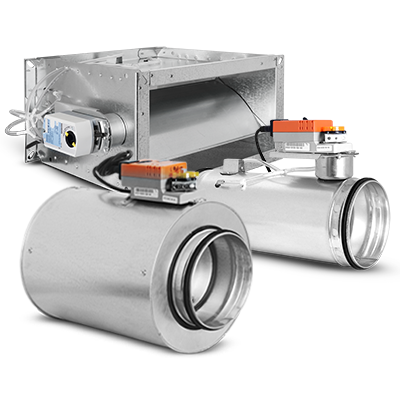
Efficient airflow ventilation relies on precise air volume control tailored to room usage, occupancy, and system demands. Alnor’s CAV, VAV, and PAV air flow regulators ensure optimal air distribution, energy savings, and stable indoor conditions in commercial, industrial, and public buildings.
These regulators adapt airflow dynamically within forced air ventilation systems, responding to temperature, pressure, or occupancy signals—improving comfort while reducing operating costs.
What are CAV, VAV, and PAV Airflow Regulators?
CAV (Constant Air Volume): Delivers a fixed airflow rate regardless of pressure changes. Used in rooms with stable occupancy, such as storage areas or technical zones.
VAV (Variable Air Volume): Adjusts airflow based on control input—CO₂ levels, temperature, or user-defined setpoints. Ideal for offices, classrooms, and hotels.
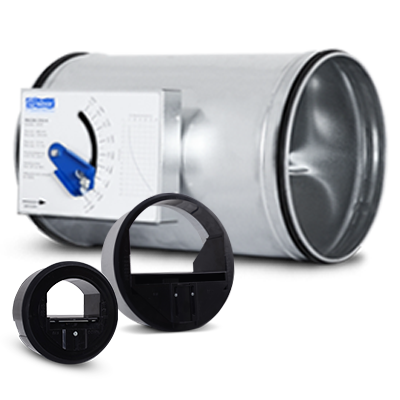
PAV (Pressure-Dependent Air Volume): Reacts to duct pressure variations without requiring external sensors. A simplified alternative to VAV for decentralized or retrofit systems.
Each regulator ensures consistent air flow control adapted to specific zone requirements, contributing to balanced pressure and better system efficiency.
Air Flow System Key Features and Benefits
Accurate air volume regulation across a broad pressure range
Integration with 0–10V or 24V controls (VAV); mechanical calibration for CAV and PAV
Compact size for easy installation in round or rectangular ducts
Corrosion-resistant construction (galvanized steel or aluminum)
Optional acoustic insulation to reduce noise in supply ducts
Benefits:
Reduced fan load and energy consumption
Stable indoor temperature and air quality
Adaptation to real-time ventilation demand
Lower installation and maintenance costs in pressure-based systems (PAV)
Support for green building and IAQ standards
Choosing the Right Flow Regulator for Your Needs
Use CAV for constant-load zones (e.g., utility rooms, server rooms)
Use VAV where airflow must follow occupancy or load variations (e.g., open-space offices, conference rooms)
Use PAV in cost-sensitive or simplified systems (e.g., retrofits, smaller duct networks)
Correct selection ensures proper zone control, pressure balance, and efficient system operation. Alnor supports designers and installers with technical documentation and selection tools.
Applications of CAV, VAV, and PAV Airflow Regulators