Fire dampers are a critical component in ensuring the fire safety of any building. These specialized passive fire protection devices are engineered to prevent the spread of flames, heat, and smoke through ductwork and HVAC ventilation systems. By automatically sealing off ventilation ducts in the event of a fire, fire dampers play a decisive role in protecting lives, maintaining the structural integrity of buildings, and limiting material damage. Alnor, with over three decades of expertise in HVAC solutions, offers certified, high-performance fire dampers for ductwork that meet the most stringent national and international standards, including those relevant to the UK market.
What is a Fire Damper?
A fire damper is a safety mechanism installed within HVAC ductwork where the duct passes through fire-resistance-rated walls or floors. Designed to respond to high heat, these dampers close automatically when a fire is detected—typically triggered by a fusible link or a thermal sensor. Once activated, the damper shuts the fire duct segment, restoring the fire-resistant integrity of the barrier. By doing so, it prevents fire and hot gases from spreading to adjacent fire zones, helping to contain the fire and protect escape routes. Fire dampers in ductwork are a vital element in maintaining building compartmentalization and life safety compliance.
Fire and Smoke Dampers – Key Features and Benefits
High-quality fire and smoke dampers offer a wide range of critical benefits:
Regulatory Compliance: Alnor's fire dampers are tested to comply with fire protection regulations, CE marking standards, and national codes such as those in the UK.
Maintaining Fire Resistance: Ensures the required fire rating of structural barriers is preserved.
Smoke Containment: Fire smoke dampers are designed to stop the movement of both cold and hot smoke, which is often more dangerous than flames.
Evacuation Safety: Fire dampers preserve emergency routes, aiding safe evacuation.
Automation Integration: Motorised fire dampers can connect to fire alarm systems and building management systems for automated control and real-time feedback.
Types of Fire Dampers in Ductwork
Alnor's range includes various fire dampers tailored for different applications:
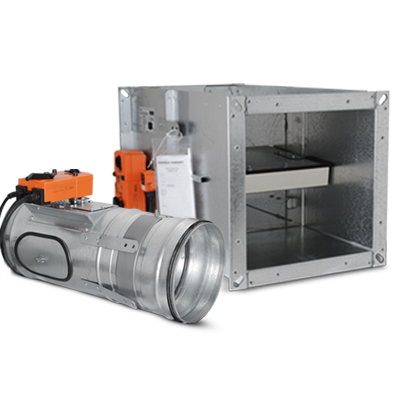
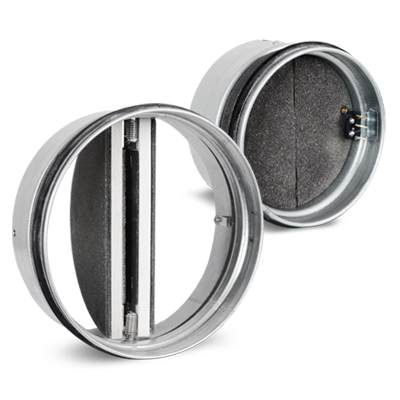
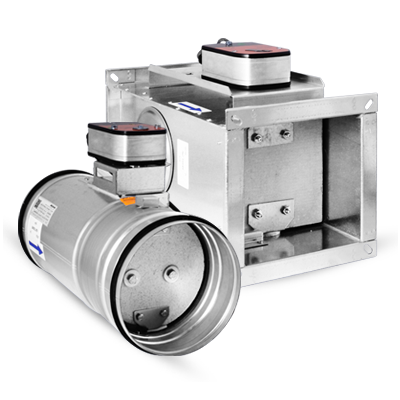
Shapes: Rectangular and round fire dampers.
Blade Designs: Single-blade, multi-blade, and curtain-type configurations.
Activation Methods: Thermal fusible links, and electrically activated motorised fire dampers with spring-return actuators.
Additional Functions: Fire smoke dampers and intumescent fire dampers that expand in response to heat.
Mounting Options: Wall-embedded or remote ducting fire dampers suitable for both new installations and retrofitting.
Variants: Intumescent fire dampers offering passive sealing in addition to mechanical closure.
Applications of Fire Dampers in Ventilation Systems
Fire dampers are a mandatory safety component in key zones of HVAC systems:
Fire-Rated Penetrations: Installed where ducts pass through walls or ceilings with fire resistance ratings.
Vertical Risers: Located at the base of shafts to isolate floor zones.
Fire Zoning: Prevents cross-zone spread of smoke and flames within shared ducting systems.
AHUs and Central Systems: Essential for protecting HVAC units and limiting fire spread through ventilation pathways.
Duct dampers play a vital role in modern fire protection, especially in commercial, residential, and industrial facilities. Alnor's HVAC damper offerings are designed for durability and compliance with all fire safety requirements.
Ductwork Fire Dampers – Installation & Best Practices
The performance of fire dampers is as much about quality as it is about proper installation. Best practices include:
Installing strictly in accordance with product certification and technical approvals.
Ensuring fire-rated ducting penetrations are sealed around the damper casing with approved fire-resistant materials.
Providing unhindered access to the damper valve and thermal release mechanism.
Scheduling and documenting regular inspections and functional tests to ensure operational readiness.
Properly installed ductwork fire dampers guarantee functionality when needed most—in an emergency.
Alnor Fire Vantilation Dampers: Technical Specifications & Certification Standards
Alnor fire dampers and fire smoke dampers meet or exceed leading industry standards:
Fire Resistance Ratings: Available in EI 60, EI 90, and EI 120, with optional S classification for smoke tightness.
Certified Performance: Tested under EN 1366-2; classified according to EN 13501-3.
Harmonized Standard: Conforming to EN 15650 for CE marking.
Materials and Sizes: Offered in galvanized or stainless steel, with a full range of dimensions and actuator types.
Compliance Documentation: Each product includes a Declaration of Performance (DoP), CE marking, and complete technical specification sheet.
Alnor's advanced solutions for fire vents and ducting dampers ensure both compliance and protection in critical ventilation applications across diverse building environments.